How Much Does Asphalt Repair Cost in Alabama?
Asphalt repair costs $250 to $800 for most jobs, per national cost guides. The average job comes in near $500. Filling a pothole runs $100 to $400. Crack repair runs $0.50 to $3.00 per linear foot. A hot mix patch runs $2 to $5 a square foot.
Those are market numbers, not our price list. Guides add a service fee of $100 to $250 to every repair, so small jobs cost more per foot. Your price depends on the size of the damage and the base under it. The miles from the plant and our yard count too. We come out, look at the pavement and give you a written quote.
What does each type of asphalt repair cost?
Cost guides price asphalt repair and patching by the method, and the method follows the damage.
| The repair | What national cost guides publish |
|---|---|
| Crack filling or crack sealing | $0.50 to $3.00 per linear foot |
| Pothole patching | $25 to $40 per pothole, plus $100 to $250 to bring out the crew and machinery |
| Filling a pothole, all in | $100 to $400 |
| Cold patch | $2 to $4 per square foot, installed |
| Hot mix patch | $2 to $5 per square foot |
| Saw-cut, full-depth patch | $4 to $12 per square foot |
| Sunken section replaced | $4 to $10 per square foot |
| Service fee on any repair | $100 to $250 |
By the patch, one guide prices a 5 by 5 foot hot mix patch at $50 to $125. A saw-cut patch the same size runs $100 to $300.
Cold patch looks close to hot mix on price. Guides call it a less effective, temporary fix, often used in winter when it is too cold for hot mix. One guide says a hot mix surface patch replaces about 2 inches of asphalt and lasts 1 to 2 years.
Saw-cut repairs cost the most per square foot. Guides call them the preferred permanent fix for potholes and alligator-cracked pavement. The bad asphalt is sawed out, then a new gravel base and hot mix go in.
Why do crack filling and crack sealing cost different amounts?
Asphalt crack filling and sealing sound like one job. Cost guides price both at $0.50 to $3.00 a linear foot. The federal manual of practice for crack treatment calls them two jobs. It splits them by how much a crack moves.
Crack sealing is for working cracks, the ones that move 0.1 inch or more. They usually run across the pavement. Sealing places specialized material above or into the crack to keep water and grit out. The manual prefers rubber-modified materials for these cracks.
Crack filling is for nonworking cracks, which move less than that. Diagonal cracks and most lengthwise cracks usually fall in this group. The manual says these cracks permit less expensive, less specialized filler, so the material bill runs lower.
Life is the other difference. One national cost guide puts crack filling at 1 to 2 years and crack sealing at 3 to 8 years. It says active cracks of 1/8 to 3/4 inch need a rubberized sealer. Larger, stable cracks get filled with asphalt emulsion.
What moves the price of asphalt repair in south Alabama?
Distance comes first. Hot mix has to reach the patch hot. Past 15 to 20 miles from a hot-asphalt plant, cost guides add delivery at $40 to $65 an hour. A rural Clarke County drive and a Mobile or Baldwin County church lot sit at different distances from a plant. The same is true of the drive from our yards in Grove Hill and Robertsdale.
The service fee is next. One guide prices pothole patching at $25 to $40 a pothole. It adds $100 to $250 for bringing out the machinery and crew. By that math, one pothole runs $125 to $290 and ten run $350 to $650. Grouping repairs into one visit spreads the fee out.
Alabama’s road bids show the same small-job effect. ALDOT posts the bids on the road contracts it lets, and patching mix gets its own line. In April 2026, a Clarke County job’s low bid was $169.25 a ton for 500 tons of patching mix. Its 7,764 tons of top-layer paving mix went at $116.36. A US-90 job in Baldwin County drew a low bid of $230.09 a ton for 50 tons of patching mix. Its 6,347 tons of paving mix went at $128.56. A June job in Monroe County drew low bids of $147.50 a ton for patching and $132.00 for paving mix.
Those are highway contracts, priced by the ton. On all three, patching came in smaller amounts and cost more per ton than the paving mix. A driveway patch is a far smaller order still.
Then comes the base under the patch. One guide warns against a quick hot mix surface patch when alligator cracks surround the hole. The same goes when the damage reaches the gravel base. Those spots need a saw-cut repair at $4 to $12 a square foot. A surface patch runs $2 to $5.
Rain and season set the clock. NOAA’s climate normals put Jackson, in Clarke County, at about 60 inches of rain a year. Mobile gets about 66. One guide notes that potholes start with moisture getting into cracks. It says to repair cracks before they turn into potholes, since untreated potholes speed up the damage. The federal manual times crack sealing for moderately cool weather, 45 to 65 degrees, such as spring or fall.
Access counts too. Guides price hard-to-reach areas higher, and a sloped surface takes more grading.
When does asphalt repair stop making sense?
Patching pays off when the damage sits in spots on pavement that is otherwise sound. One cost guide calls resurfacing the better option for a driveway with many potholes. It points to an asphalt overlay when less than 25 to 30 percent of the surface is damaged. The base also has to be stable and level.
The same guide says to replace the pavement once cracks cover 60 to 70 percent or more of it. Buckled pavement is on its replacement list too. The federal crack manual makes the same kind of call. Where pavement moves up and down under traffic and shows severe distress, it calls for repairs such as patching. Crack treatment there is a temporary fix at best.
Replacing a whole drive or lot is a paving job. Our post on what a new asphalt driveway costs has those numbers.
Should asphalt repairs come before sealcoating?
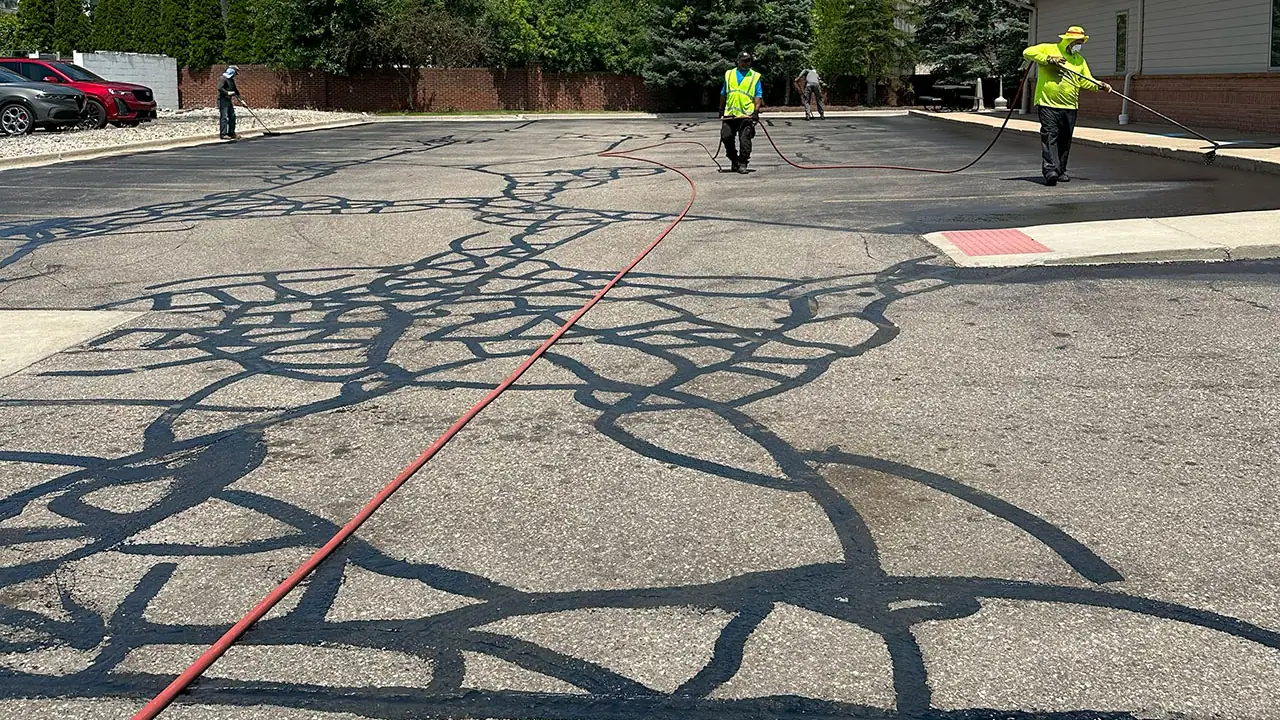
Yes. Sealcoating does not fix cracks, as one cost guide puts it. The sealcoating industry’s best-practice guide says to ignore hairline cracks. Cracks about 1/4 to 3/4 inch wide get cleaned out and filled first. Wide cracks and alligator cracking mean the pavement or base needs repair before sealer goes on. So do soft or sunken spots.
That prep is its own line on the bill. One national guide puts severe crack and surface repair before sealing at $0.60 to $1.75 a square foot. Sealcoating follows the repairs, and sealer prices are in the sealcoating cost guide.
What about parking lots for businesses, churches and schools?
One guide uses the same $2 to $5 a square foot for hot-patch repair on driveways, roads and parking lots. A lot brings more square footage and more traffic.
We plan the work in phases with you. That way a business or a church can keep using part of the lot while one section is closed. Once the repairs and any sealcoating are done, the lot gets parking lot striping again.
What should an asphalt repair quote include?
A quote you can compare lists each repair area with its square footage and method. It also says what base work sits under each patch.
Call or text (251) 589-9970 about a repair on your driveway or lot. We come out, measure the damage and give you a written quote.