
Asphalt vs Concrete Driveway: Which Makes Sense in South Alabama?
Concrete usually costs more up front and lasts longer with less upkeep. Asphalt costs less and can be driven on sooner. It is easier to patch, but it needs sealing every few years. One national cost guide prices new asphalt at $7 to $13 a square foot and concrete at $8 to $20.
Those are market numbers from published guides, not our price list. In south Alabama, summer heat favors concrete, and easy repairs favor asphalt. We build asphalt driveways, and concrete drives are a job for a concrete contractor. The tradeoffs below should help you pick the surface that fits your property.
How do asphalt and concrete driveways compare?
Published guides line the two surfaces up like this. The numbers are national, so treat them as a starting point for your own quotes.
| Asphalt driveway | Concrete driveway | |
|---|---|---|
| Installed cost, one national guide | $7 to $13 a square foot | $8 to $20 a square foot |
| When a car can park on it | Once it cools | About 7 days after the pour |
| Typical life, one cost guide | 20 to 30 years | 30 to 40 years |
| Sealing | First seal in about 2 to 5 years, then every few years | Recommended, not required |
| Summer heat | Softens, and can scuff | Holds up better |
| Repairs | Patches blend in, and a new layer can go on top | Patches show, and bad sections get replaced |
| Color | Dark gray to black | Light gray, or stained or stamped |
Which costs more, asphalt or concrete?
Concrete, in the national cost guides. They disagree on how much more. The guide in the table calls asphalt “slightly less” than concrete. Another says concrete costs at least 45 percent more.
The finish moves the concrete price a long way. Plain and broom finishes sit at the low end of that guide’s range. Stamped concrete runs $12 to $18 a square foot, and stained concrete runs $18 to $20.
Our post on what an asphalt driveway costs in Alabama covers base work and Alabama bid prices. It also shows how the size of the drive moves the total.
How long before you can drive on each one?
Asphalt is ready first. The Asphalt Institute says hot mix asphalt has no cure time and takes traffic once it cools. Some cost guides still say to wait a few days. Asphalt softens in summer heat, so we tell you on the job when to put cars on it.
Concrete needs a week. A concrete industry guide says cars can usually use a new concrete drive seven days after the pour. By then it has about 70 percent of its strength. The same guide says to keep RVs and large trucks off for at least 28 days.
How do south Alabama heat and rain treat each one?
Summers here are long and hot. NOAA’s climate normals count about 65 days a year at 90 degrees or hotter in Mobile. Jackson, in Clarke County, averages about 67. Rain runs about 66 inches a year in Mobile and about 60 in Jackson.
Heat is concrete’s strong point. Cost guides rate concrete the better fit for hot climates and say asphalt can suffer in high heat. Asphalt is a flexible pavement. It softens as temperatures rise and stiffens as they fall.
That softness can show up as scuffs. A state asphalt association says turning the steering wheel while a car sits still can scuff the surface. Most of those marks fade in time. The same group suggests plywood to spread the weight of heavy parked loads.
Rain works on both surfaces. A driveway needs water to drain off it and away from the house. Guides say either type can fail within a few years without a stable gravel base under it. That puts the grading and the stone base first, whichever surface goes on top.
Which one needs more upkeep?
Asphalt needs more. The Asphalt Institute says a well built asphalt driveway should not need sealing for about 2 to 5 years. After that, sealcoating every few years helps protect it from car fluids and aging. Cracks get filled as they show up, to keep water out of the layers below.
Concrete needs less. Cost guides call a concrete sealer recommended, not required. One guide suggests a rinse or pressure wash once a year. Concrete also shows every oil drip and spill, so keeping it clean takes more scrubbing.
What happens when each one cracks?
Asphalt is easier to fix. Guides say cracks and damage in asphalt are fairly easy to repair, and the patches blend in well. Potholes and failed spots are asphalt repair and patching work. When the surface wears out over a sound base, asphalt resurfacing puts a new layer on top.
Concrete is harder to fix. Patches on concrete usually show. One cost guide prices concrete driveway repairs at $3 to $25 a square foot. Large cracks can mean replacing whole sections, and that work belongs to a concrete contractor.
What changes on a long rural driveway?
Length multiplies every gap. Take a drive 12 feet wide and 300 feet long, which is 3,600 square feet. At the ranges in the table, asphalt comes to about $25,200 to $46,800, and concrete to about $28,800 to $72,000. Treat that as rough arithmetic, not a quote.
Cure time counts more out here too. If a long drive is your only way in, new concrete means a week of parking at the road.
If your drive is gravel or crush and run today, that stone may be the start of the new one. When the drive holds its shape, asphalt can often go right over it once the grade is reshaped and compacted. Concrete also goes down over a compacted gravel base, with forms built along the edges first. Another option is to pave the stretch by the house and keep the rest in stone for now.
What does the City of Mobile require at the street?
Inside the City of Mobile, concrete is the standard at the street. The city’s residential driveway permit form lists concrete as standard in the right of way. It lists asphalt as non-standard, and asphalt there needs the city’s approval first.
Past the right of way, the surface on your own land is your choice. An asphalt drive can tie in flush with a concrete apron at the street. A driveway onto a county road or a state or US highway follows that road owner’s rules. We build to them.
When is each one the right call?
Concrete fits when:
- you want the longest life and the least upkeep, and the higher up-front cost works for you
- you can park somewhere else for a week while it cures
- you want color or a stamped pattern
- your apron is in the City of Mobile right of way, where concrete is the standard
Asphalt fits when:
- a lower cost per foot matters, especially on a long drive
- you need the drive back in use soon after paving
- you have a sound gravel or crush and run drive to pave over
- you are fine with a sealcoat every few years and patching as needed
Is an asphalt driveway the right fit for your property?
If asphalt fits, see how we build an asphalt driveway on a graded, compacted base. Call or text (251) 589-9970. We come out, look at the job and give you a written quote. It spells out the square footage, the base work and the thickness for your drive.
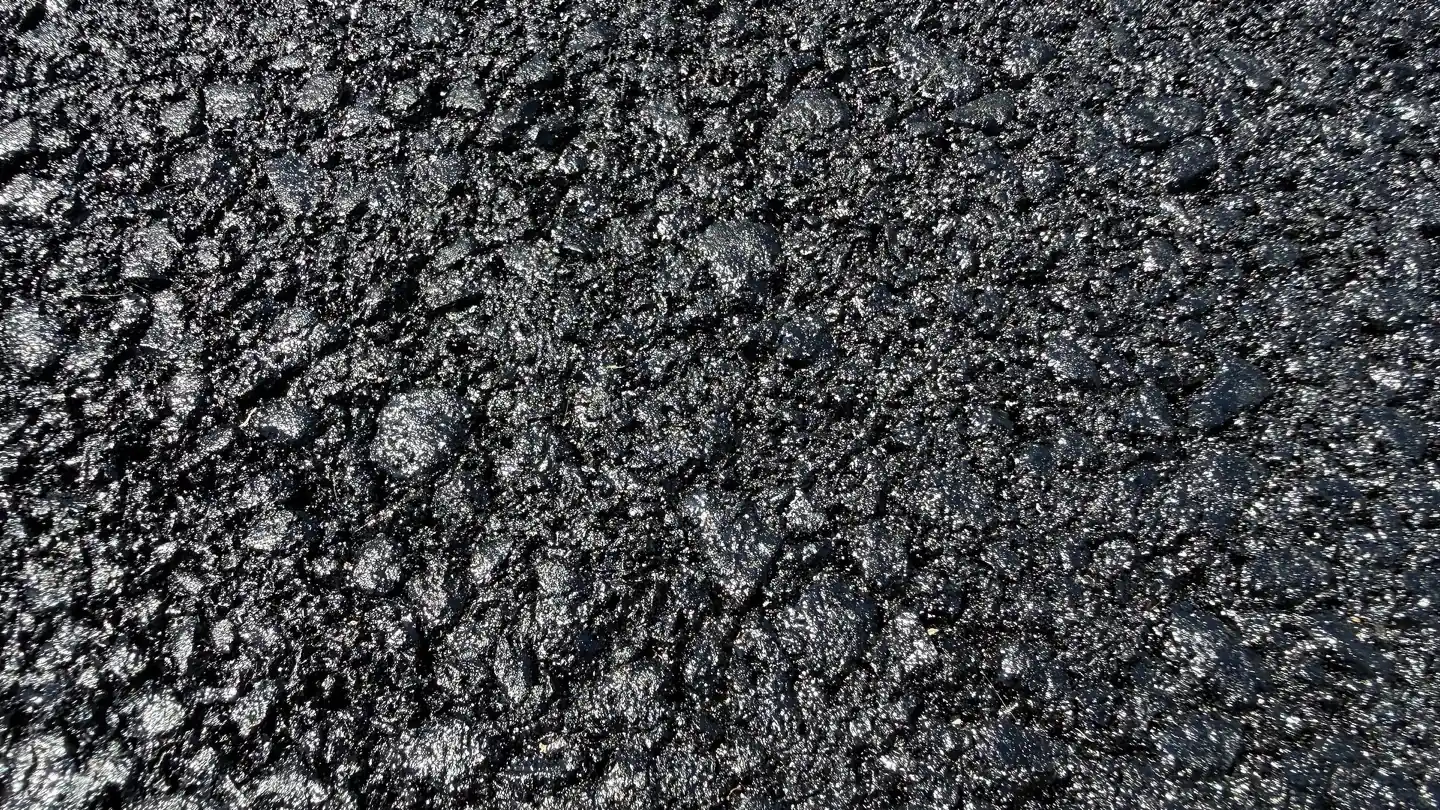
Photo at top: fresh asphalt on a newly paved driveway, by Famartin via Wikimedia Commons, licensed CC BY-SA 4.0.
